Quality Control in Compression Socks Manufacturing: What Buyers Should Inspect For brands and retailers sourcing compression socks , ensu...
Quality Control in Compression Socks Manufacturing: What Buyers Should Inspect
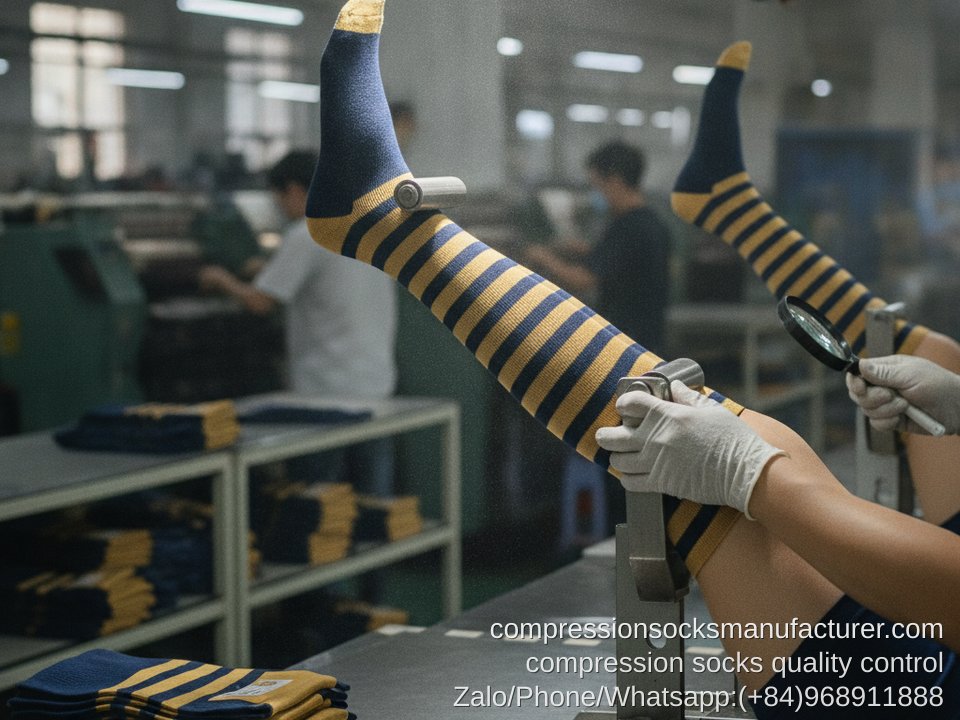
For brands and retailers sourcing compression socks, ensuring consistent quality is paramount. This isn't just about aesthetics; it's about the product's efficacy and the wearer's comfort and safety. Effective compression socks quality control starts long before the final product is boxed and shipped. It requires a deep understanding of the manufacturing process, potential pitfalls, and the specific standards that define superior hosiery. This guide outlines what quality-focused buyers should inspect to guarantee they receive the best possible production from their chosen manufacturer.
At Compression Socks Manufacturer, operated by Gold Garment in Ho Chi Minh City, Vietnam, we understand that rigorous quality assurance is non-negotiable. Our commitment to excellence is built upon a foundation of meticulous processes and a dedication to meeting international standards. We believe that transparency in our production and a clear understanding of what buyers should look for fosters strong, long-term partnerships. This proactive approach to compression socks quality control benefits everyone involved, from the factory floor to the end consumer.
Understanding the intricate steps involved in creating high-performance compression wear is key to appreciating the importance of each quality check. From yarn selection and knitting to dyeing, finishing, and packaging, every stage presents opportunities for both success and potential defects. A comprehensive approach to garment quality control Vietnam, as detailed in Gold Garment's own resources, highlights the multi-faceted nature of ensuring product integrity. This holistic view is essential when evaluating any apparel manufacturing partner.
Material Integrity: The Foundation of Quality
The journey of a quality compression sock begins with its materials. The choice of yarns directly impacts the sock's performance, durability, and comfort. Buyers should inquire about the specific materials used, such as nylon, spandex, polyester, cotton, bamboo, or merino wool blends. Understanding the properties of each material, as detailed in our compression socks Materials Guide, is crucial.
Key Inspection Points for Materials:
- Yarn Quality: Are the yarns consistent in thickness and strength? Are they free from knots, slubs, or inconsistencies that could affect the knitted fabric? High-quality yarns are essential for achieving the correct compression levels and durability.
- Spandex Content and Recovery: Spandex is vital for stretch and compression. Buyers should confirm the percentage of spandex used and verify its elasticity and recovery properties. A low-quality spandex will lose its shape and compression over time, rendering the sock ineffective.
- Colorfastness: For dyed socks, inquire about colorfastness tests. The colors should not bleed during washing or fade excessively with exposure to light. This is particularly important for branded socks where color consistency is key.
- Breathability and Moisture-Wicking: Depending on the intended use (e.g., athletic socks), the material should offer good breathability and moisture-wicking properties.
Knitting and Construction: Precision in Every Stitch
The knitting process is where the sock takes its form and achieves its graduated compression. This stage requires precision machinery and skilled operators. The knitting pattern, stitch density, and the seamlessness of the construction all contribute significantly to the final product's quality and comfort.
Key Inspection Points for Knitting and Construction:
- Stitch Density and Uniformity: The stitches should be uniform and consistent throughout the sock. Uneven stitches can lead to weak spots, inconsistent compression, and a less comfortable fit.
- Graduated Compression: This is a defining feature of compression socks. Buyers must verify that the compression is indeed graduated – tighter at the ankle and gradually decreasing up the leg. This can be assessed through specialized pressure testing equipment or by understanding the knitting machine's capabilities and programming.
- Seamless Toe Construction: A well-constructed seamless toe enhances comfort and prevents irritation, especially for prolonged wear. Inspect for any protruding threads or uncomfortable seams at the toe area.
- Ribbing and Cuff Integrity: The ribbed cuff should be strong enough to hold the sock up without being too tight or constrictive. It should also maintain its elasticity.
- Overall Shape and Fit: The sock should have the correct anatomical shape, conforming to the leg without bunching or sagging.
Dyeing and Finishing: Aesthetics and Performance Enhancement
The dyeing and finishing processes impact both the appearance and the functional properties of the compression socks. Proper dyeing ensures vibrant, consistent colors, while finishing treatments can enhance softness, durability, and antimicrobial properties.
Key Inspection Points for Dyeing and Finishing:
- Color Consistency: Ensure that colors are consistent across different batches and within the same batch. Any shade variations or streaks are indicative of poor dyeing processes.
- Dye Penetration: The dye should penetrate the fibers thoroughly for lasting color. Check for any white spots or uneven coloration.
- Hand Feel and Softness: The finished socks should have a pleasant feel. Over-processing or the use of harsh chemicals can result in stiff or rough fabric.
- Shrinkage Control: After dyeing and finishing, socks should undergo processes to minimize shrinkage during washing. Inquire about pre-shrinking treatments.
- Special Treatments: If the socks are advertised with features like moisture-wicking or antimicrobial properties, verify that these treatments have been applied correctly and effectively.
Inspection Methods and Standards: The Role of AQL
To systematically assess product quality, manufacturers and buyers often rely on established inspection methodologies. The AQL inspection socks (Acceptable Quality Limit) system is a widely recognized standard for determining the acceptable number of defects in a production lot. This statistical sampling method allows for efficient quality assessment without inspecting every single item.
Understanding AQL Levels:
- AQL Levels: AQL is defined by a table that dictates the sample size and the maximum number of defects allowed for a lot to be accepted, based on different inspection levels (e.g., General Inspection Level I, II, III).
- Defect Classification: Defects are typically classified into three categories: Critical (e.g., safety hazards), Major (e.g., significant impact on function or appearance), and Minor (e.g., cosmetic flaws with little impact).
- Buyer's Role: Buyers should specify their desired AQL level and defect classification criteria to their manufacturer. This ensures alignment on quality expectations.
Beyond AQL, buyers should also be aware of general compression socks defect standards. These are often based on industry best practices and the specific requirements of the product's intended market. A reliable manufacturer will have their own internal quality control procedures that align with or exceed these standards. garment quality control Vietnam. compression wear manufacturer Gold Garment.
Final Product Inspection: The Last Line of Defense
The final inspection is the last opportunity to catch any issues before the goods are shipped. This stage involves checking the finished, packaged products.
Key Inspection Points for Final Product:
- Sizing Accuracy: Verify that the socks are manufactured according to the specified size chart. Mismatched sizes are a common issue.
- Color and Design Verification: Ensure the product matches the approved samples in terms of color, design, logos, and any other branding elements.
- Packaging and Labeling: Check that the packaging is intact, correctly labeled with all required information (size, material composition, care instructions, country of origin), and meets any specific retailer requirements.
- Quantity Verification: Confirm that the number of units in each package and carton matches the order.
- Overall Presentation: The socks should be neatly folded or presented within their packaging, free from dust or foreign matter.
A thorough hosiery quality check at this stage is crucial. It's also important to consider the overall manufacturing capabilities and ethical practices of your partner. For instance, brands seeking a reliable compression wear manufacturer Gold Garment has a proven track record, as demonstrated by their work with various activewear clients. Their experience in complex garment production, including socks, underscores their commitment to quality across their entire operation.
Partnering for Quality: What Buyers Can Expect
When partnering with a reputable manufacturer like Compression Socks Manufacturer (Gold Garment), buyers can expect a structured approach to quality control. Our processes are designed to integrate quality checks at every critical stage of production, from raw material sourcing to final dispatch from our facility in Ho Chi Minh City. With a minimum order quantity (MOQ) of just 100 pieces per style, we cater to businesses of all sizes looking for factory-direct pricing and reliable production.
We offer both OEM and ODM services, providing flexibility for brands looking to develop their own unique lines or private label existing designs. Our team of experts works closely with clients to ensure all specifications are met, from material composition and compression levels to design details and packaging. Understanding the nuances of different manufacturing models, such as OEM vs Private Label compression socks, is part of our client support.
Our experience spans over a decade, serving discerning clients across the USA, Europe, Australia, and Southeast Asia. We understand the importance of meeting diverse market demands and regulatory requirements. For brands looking to diversify their apparel offerings, they might also partner with a Vietnam sweatshirt manufacturer, a testament to the country's robust garment manufacturing sector.
The manufacturing process itself is intricate. For a detailed understanding, our article on How compression socks Are Made: The Manufacturing Process Step-by-Step provides valuable insights. Furthermore, our comprehensive compression socks: Complete OEM & Private Label Buyer's Guide offers an in-depth look at what buyers need to consider when sourcing. Buyers also need to be aware of the Minimum Order Quantity for compression socks, which we keep accessible at 100 pcs.
Frequently Asked Questions
Q: What is the most critical aspect of compression sock quality control for buyers?
A: The most critical aspect is ensuring the graduated compression is accurately achieved and maintained throughout the sock. This directly impacts the product's efficacy in improving circulation and reducing swelling. Buyers should verify the manufacturer's testing methods for compression levels.
Q: How can buyers ensure consistency in color and design across multiple orders?
A: Buyers should work with manufacturers who maintain detailed records of approved color standards (e.g., Pantone codes) and design specifications. Requesting and approving pre-production samples for every new order, or at regular intervals for ongoing orders, is crucial. A reputable factory will have robust systems for color matching and design replication.
Q: What should buyers do if they discover defects after receiving their order?
A: Immediately notify the manufacturer with detailed documentation, including photographs or videos of the defects. Discuss the issue openly and refer to the agreed-upon quality standards and AQL levels. A good manufacturer will work collaboratively to find a resolution, which may include replacements, rework, or a credit for the defective goods.
Q: How does factory-direct pricing impact quality control?
A: Factory-direct pricing, like that offered by Compression Socks Manufacturer, often means you are working directly with the production facility, cutting out intermediaries. This closer relationship can lead to better communication and a more direct understanding of quality expectations. However, buyers still need to actively engage in the quality control process and clearly communicate their requirements to ensure quality is not compromised for price.
Prioritizing detailed inspections at every stage ensures you receive high-quality compression socks that meet your brand's standards and your customers' expectations.
Partner with us to experience a seamless and quality-driven manufacturing process for your compression sock needs.
📩 Request a Free Quote — Response Within 5 Minutes
GOLD GARMENT — Vietnam's Trusted Socks Manufacturer
📱 WhatsApp: +84 968 911 888
📩 Email: contact@goldgarment.com
🌎 Website: compressionsocksmanufacturer.com
📍 Factory: 32 Pho Quang, Ho Chi Minh City, Vietnam
Factory-direct pricing · MOQ from 100 pcs · Sample development · Worldwide shipping


COMMENTS