Discover how compression socks are crafted for improved circulation. Get an instant quote now! How Compression Socks Are Made: The Manufac...
Discover how compression socks are crafted for improved circulation. Get an instant quote now!
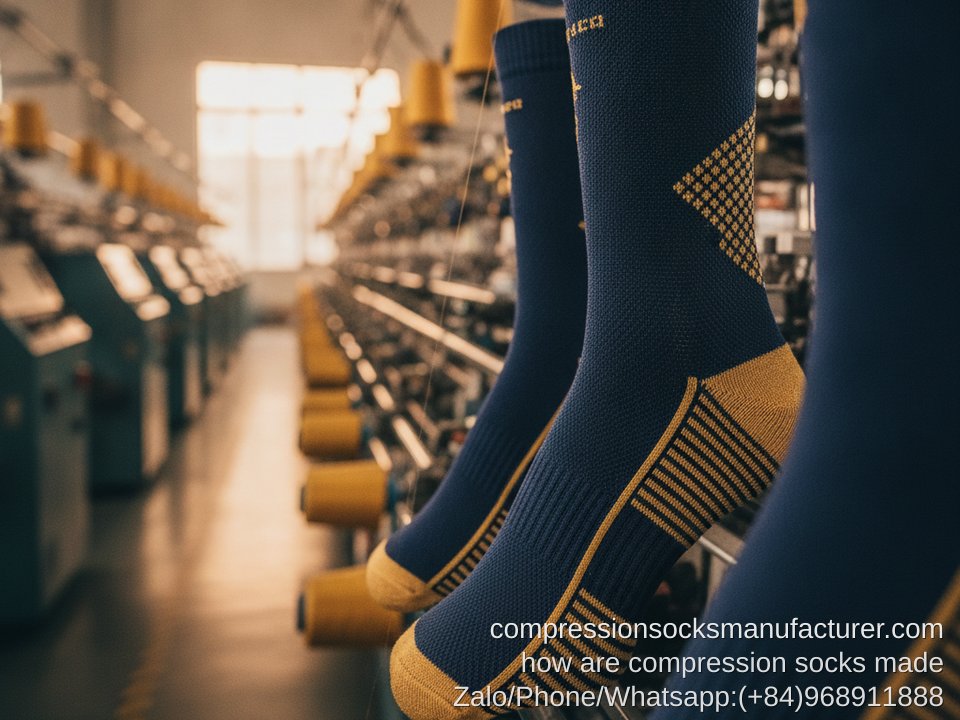
How Compression Socks Are Made: The Manufacturing Process Step-by-Step
For brands and businesses looking to source high-quality compression socks, understanding the intricate manufacturing process is crucial. This knowledge empowers you to make informed decisions, ensure product quality, and build trust with your end consumers. At Compression Socks Manufacturer, operated by Gold Garment in Ho Chi Minh City, Vietnam, we pride ourselves on transparency and excellence in every step of producing these specialized garments. Let's delve into how compression socks are made, from raw materials to the finished product.
The journey of a compression sock is a blend of advanced technology and skilled craftsmanship. It's a detailed process designed to achieve the precise graduated compression that defines these beneficial socks. We'll guide you through each stage, offering insights valuable for any first-time buyer exploring the nuances of sock manufacturing.
Understanding the Core Components
Before diving into the manufacturing itself, it's essential to understand the materials that give compression socks their unique properties. The primary materials are typically a blend of nylon and spandex (often referred to as elastane or Lycra). Nylon provides durability, shape retention, and a smooth feel, while spandex offers the crucial elasticity needed for compression. Other materials like cotton, merino wool, or polyester might be incorporated for added comfort, breathability, moisture-wicking, or specific performance characteristics. The precise blend significantly impacts the sock's feel, performance, and suitability for various applications, as detailed in our compression socks: Complete OEM & Private Label Buyer's Guide.
The quality of these raw materials is paramount. We source premium yarns that ensure consistent stretch, recovery, and durability. This commitment to material excellence is a cornerstone of our operation, reflecting the broader standards set by Gold Garment performance wear, our parent company's extensive experience in producing high-performance textiles.
The Sock Knitting Process: Precision in Every Loop
The heart of compression sock production lies in the sock knitting process. This is where the fabric is formed, incorporating the necessary compression levels. Modern knitting machines are highly sophisticated, capable of creating complex patterns and varying knit densities within a single garment.
1. Yarn Preparation and Loading
The selected yarns are wound onto cones. These cones are then loaded into the knitting machines. Each yarn type (nylon, spandex, etc.) is carefully placed in its designated feeder to ensure the correct blend and tension are maintained throughout the knitting process. Spandex yarns are often knitted in a way that they are encased by nylon or other fibers, providing elasticity without being directly against the skin for comfort.
2. Circular Knitting Machines
We utilize advanced circular knitting machines specifically designed for hosiery. These machines have a circular bed of needles that rotate, interlooping the yarns to form a seamless tube. The diameter of the cylinder and the gauge of the needles determine the size and fineness of the knit.
For compression socks, specialized knitting techniques are employed. The machine is programmed to vary the stitch density and the amount of yarn fed at different parts of the sock. This is how graduated compression is achieved – with the highest pressure at the ankle, gradually decreasing up the leg. This precise control is fundamental to how compression socks are made effectively.
3. Designing the Compression Profile
The design of the compression profile is critical and is programmed into the knitting machines. This involves specifying the exact pressure levels (measured in mmHg) for different zones of the sock. For example, the ankle might be designed for 20-30 mmHg, while the calf area could be 15-20 mmHg.
This intricate programming ensures that the final product delivers the intended therapeutic or performance benefits. Understanding these technical specifications is key for buyers looking for specific functionalities in their sourced socks.
Post-Knitting Processes: Shaping and Finishing
Once the knitting is complete, the resulting sock tubes undergo several crucial steps to become finished garments. These stages refine the product, ensuring comfort, durability, and aesthetic appeal.
4. Pairing and Seaming
The knitted tubes are cut to length, and then pairs are matched. The toe of each sock tube is then closed. This is typically done using a seaming machine, which creates a flat, comfortable seam that is virtually unnoticeable when worn. A well-executed toe seam is vital for preventing irritation and enhancing overall comfort, especially for long-duration wear. activewear manufacturer Vietnam Gold Garment.
5. Steaming and Setting (Boarding)
After seaming, the socks are put through a steaming process. This involves placing the socks onto specially shaped forms (boards) and applying heat and moisture. This process sets the shape of the sock, ensuring it conforms to the leg's contours and that the graduated compression remains stable.
This step is vital for achieving the correct fit and ensuring the sock maintains its intended compression profile after repeated wear and washing. It’s a critical part of the compression socks production steps that guarantees performance.
6. Quality Control and Inspection
Throughout the entire manufacturing process, rigorous quality control checks are performed. However, a dedicated inspection stage occurs after steaming. Each sock is meticulously examined for any defects in knitting, seaming, sizing, or material flaws. We check for correct compression levels, ensuring they meet the specified standards.
This attention to detail is what differentiates a premium product. Our commitment to quality is unwavering, ensuring that every pair leaving our hosiery factory Vietnam meets the highest international standards.
Final Touches: Packaging and Distribution
The final stages involve preparing the socks for market. These steps are about presentation and readiness for the end consumer or retail environment.
7. Labeling and Branding
Depending on the client's requirements, various labels are attached. This can include brand logos, size indicators, care instructions, and any specific certifications or performance claims. For private label clients, this is where their brand identity is integrated into the product.
8. Packaging
The finished and inspected compression socks are then folded, paired, and packaged. Packaging can range from simple polybags to more elaborate retail-ready boxes or hang-tags. The packaging protects the socks during transit and provides essential product information to the consumer.
Our ability to handle diverse packaging needs makes us a versatile partner for brands of all sizes. We understand that presentation is key, and our factory in Ho Chi Minh City is equipped to meet these demands.
9. Worldwide Shipping
Once packaged, the orders are prepared for shipment. As a leading manufacturer, we offer worldwide shipping, ensuring that businesses across the globe can access our factory-direct pricing and high-quality products. Our logistical expertise ensures timely and efficient delivery, whether you're in the USA, Europe, Australia, or Southeast Asia.
Our experience as a reliable activewear manufacturer Vietnam Gold Garment has honed our global logistics capabilities. We also work with partners who specialize in other apparel categories, such as a Vietnam sweatshirt manufacturer, to offer comprehensive sourcing solutions.
Frequently Asked Questions
Q: What makes compression socks different from regular socks in manufacturing?
A: The primary difference lies in the knitting process. Compression socks are made on specialized circular knitting machines programmed to create graduated compression by varying stitch density and yarn tension across different zones of the sock. Regular socks are typically knitted with a uniform density.
Q: How is the compression level (e.g., mmHg) determined and achieved?
A: The compression level is determined by medical or performance requirements and is programmed into the knitting machine's software. The machine then precisely controls the amount of yarn fed and the tension applied to create specific pressure zones, typically highest at the ankle and decreasing up the leg.
Q: Can I get custom compression profiles for my brand?
A: Absolutely. As a custom manufacturer, we can work with your specific requirements for compression levels, zones, and designs. Our team collaborates with clients to ensure the final product meets their exact needs, a key benefit of working with a factory-direct partner like Compression Socks Manufacturer, operated by Gold Garment.
Q: What is the minimum order quantity (MOQ) for compression socks?
A: Our MOQ is typically 100 pieces per style. This flexible minimum allows smaller brands and businesses to access our factory-direct pricing and high-quality production capabilities.
Understanding how compression socks are made highlights the precision and technology involved. Partner with Compression Socks Manufacturer for your sourcing needs and experience the quality that comes from expert craftsmanship and factory-direct advantages.
📩 Request a Free Quote — Response Within 5 Minutes
🌎 Website: compressionsocksmanufacturer.com
Factory-direct pricing · MOQ from 100 pcs/style · Sample development · Worldwide shipping


